
The International Monetary Fund (IMF) has said its executive board granted $1 billion in assistance to Pakistan this month after finding out that the country met all conditions and targets for it.


Several executives argue that UPI has the potential to grow tenfold, but warn that the absence of a monetisation model risks stagnating the real-time payments system, which has been recording all-time-high transaction volumes every year.

Better protection for depositors and investors was one of the chief considerations in Union Finance Minister Nirmala Sitharaman introducing, on Friday, the Banking Laws (Amendment) Bill, 2024, in the Lok Sabha to amend four pieces of legislation. This amendment is also to improve audit quality in public-sector banks (PSBs), offer consistency in reporting by banks to the Reserve Bank of India (RBI), and provide for an increase in the tenure of directors in cooperative banks.

The report contains names of entities eligible for bank licences. It was not immediately known how many applicants have been shortlisted by the high-level advisory panel.

Finance Minister Nirmala Sitharaman on Saturday said she is likely to introduce the new income tax bill, which will replace the six-decade-old I-T Act, in the Lok Sabha in the coming week.

If indeed we want the board to manage the RBI, probably the government should take a close look at the US Federal Reserve system which has a two-part structure - a central authority in Washington, DC, and a decentralised network of 12 Federal Reserve Banks located throughout the country, says Tamal Bandyopadhyay.
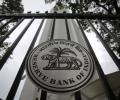
These changes will entail a relook at the various laws governing banks in the country - the two Bank Nationalisation Acts (passed in 1970 and 1980); the State Bank of India (SBI) Act of 1955; and the Companies Act of 2013.
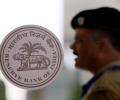
The Reserve Bank on Friday approved the transfer of Rs 99,122 crore as surplus to the central government for the accounting period of nine months ended March 31.

Seasoned bureaucrat and a stickler for rules Finance Secretary Tuhin Kanta Pandey will be at the helm of capital market regulator, Securities and Exchange Board of India (SEBI), for three years. The 1987-batch Odisha-cadre Indian Administrative Service (IAS) officer, Pandey, would replace Madhabi Puri Buch, whose three-year term ends on Friday.

Reserve Bank of India (RBI) on Friday said its board has approved a dividend payment of Rs 30,307 crore to the government for the financial ended March 2022. The board approved the transfer of Rs 30,307 crore as surplus to the central government for the accounting year 2021-22 while deciding to maintain the Contingency Risk Buffer at 5.50 per cent, RBI said in a statement. The decision on the dividend payment was made in the 596th meeting of the Central Board of Directors of RBI, headed by Governor Shaktikanta Das, held on Friday.

A corporate lawyer said that this is the biggest failure of corporate governance in this country. He pointed out that American investors can even take the bank to court for giving false statements to stock exchanges and even file class action suits. Some even questioned how RBI overlooked Kochhar's misdeed.

'Das is friendly, but he finally does what he does. The quality of engagement is very good.'

Mint Road, on December 21, 2023, flagged the role of self-regulatory organisations (SROs) in strengthening the compliance culture in regulated entities (REs) and providing a consultative platform for policymaking. It also decided to issue an omnibus framework for SROs.
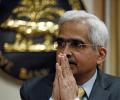
The Reserve Bank on Wednesday increased the benchmark lending rate by 40 basis points (bps) to 4.40 per cent in a bid to contain inflation, which has remained stubbornly above the target zone of 6 per cent for the last three months. The decision follows an unscheduled meeting of the Monetary Policy Committee (MPC), with all six members unanimously voting for a rate hike while maintaining the accommodative stance. While the inflation has remained above the targetted 6 per cent since January, RBI Governor Shaktikanta Das said the inflation print in April is also likely to be high.
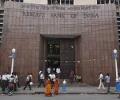
Last year, the RBI had transfered its Rs 33,010-crore (Rs 330.1 billion) surplus profit to the Centre.

While the capital spending is being maintained at 3.1 per cent of the GDP, a little more would have boosted economic growth even further, suggests Rajiv Memani.
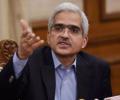
The Reserve Bank of India Governor Shaktikanta Das on Monday said that the "momentum of inflation is on a downward slope" and the central bank would continue to strike a delicate balance between the need to contain price rise and ensure economic growth. The Reserve Bank's inflation projections, Das said, are "robust" but contingent on downside and upside risks associated with the movement of global crude oil prices. The RBI takes into account a particular range within which crude prices are expected to fluctuate considering all the factors that can be anticipated and that can be sort of foreseen as of today, he said.

Market leaders in this line of business - New India Assurance and Tata AIG - have begun to reassess the premium on risk exposure of their portfolio in the director's and officer's liability business.

The Reserve Bank of India (RBI) has given HDFC Bank six months to migrate HDFC's home loan customers to external benchmark linked lending rate (EBLR), top sources in the bank told Business Standard. Almost half of HDFC's 5.4 million customers are home loan customers. It is mandatory for banks to link retail loans and loans to micro, medium and small enterprises to an external benchmark. Non-banking financial companies do not have such a mandate.
The UTI Bank board has found a way to retain P J Nayak at the helm by recommending his name as the executive chairman for two years from August 1, 2007. The bank's board made the proposal after a meeting.

The size of Reserve Bank's balance sheet increased by 11.08 per cent to Rs 70.47 lakh crore as on March 2024, leading to the highest-ever dividend payout to the government, according to the central bank's annual report. In actual terms, the increase was Rs 7,02,946.97 crore over Rs 63.45 lakh crore as on March 2023.
The government has proposed "drastic changes" in the rules framed to retune the composition of three committees of the RBI: Board for Financial Supervision, the Board for Payment and Settlement Systems and the Committee of the Central Board.

A top-class board is important from a systemic point of view, more so at a time when the wider financial world and India Inc is chasing the same talent as banks.

The government's initiative to migrate SEZ data from NSDL software to ICEGATE system for streamlined reporting of import data caused double counting of gold imports, resulting in inflated figures and the issue has now been largely rectified, government sources said. The downward revision has provided the actual picture of trade deficit (difference between imports and exports), which was earlier looking very high. The deficit for November will now be revised downwards from $37.84 billion to about $32.8 billion. Similarly, there will be a revision in overall import numbers as well.
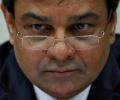
Under Urjit Patel, the then RBI Governor, the central bank had a habit of making complete about-turns on various issues, including electoral bonds and digital payments, former finance secretary Subash Chandra Garg said in his book titled 'We Also Make Policy: An Insider's Account of How the Finance Ministry Functions.' Citing some instances of about-turns by the then RBI Governor Patel, Garg in his book said, RBI had done so on the electoral bond issue and it had so in case of setting up of Payments Regulatory Board (PRB). RBI also made unilateral decisions like ordering complete data localization for participation in the payment system, Garg wrote in the book which will hit the stands on October 1.

Govt reconstitutes body, says will not interfere in senior PSB appointments

Believe it or not, the regulator is even stretching its arm to identify stressed borrowers and gauge the 'distance to default' as a measure of a particular bank's fragility, reveals Tamal Bandyopadhyay.
The Supreme Court on Wednesday issued notices to the Centre and the Reserve Bank of India on a petition seeking probe into the alleged money laundering by the trustees of Mumbai's Lilawati Hospital.
Although the Budget has projected only Rs 1,120 crore (Rs 11.2 billion) receipts from disinvestment, sources said some big-ticket initial public offers, or IPOs, could hit the markets soon. Finance Minister Pranab Mukherjee will meet the Securities & Exchange Board of India board on Friday to discuss, among other things, the disinvestment roadmap and the Budget proposal to raise the threshold for non-promoter public shareholding for all listed companies in a phased manner.

In a proposal to FinMin, the Banks Board Bureau suggests asset sales to PSUs within a deadline to recover bad loans.

Bad loans of PSBs are at Rs 20 trillion. Most of it is, I sense, due to corruption and behest lending. Nobody pays a price for this charade. Not the promoters, the bankers, RBI officials, finance ministry bureaucrats or politicians, points out Debashis Basu.

With the introduction of Rs 200 notes, the problem people face due to high-value Rs 2,000 notes would be taken care of.

'For a responsible person like him to utter such nonsense is shameful.' 'He is not fit to be a director on the RBI central board.'

The annual earnings of a non-executive chairman of a PSB is capped at Rs 10 lakh, inclusive of fees for attending board meetings. This is way below the compensation of the chairman of any private bank, reveals Tamal Bandyopadhyay.

The decision by the Reserve Bank of India to introduce a unified regulatory framework on connected lending for all the regulated entities (RE) is expected to reduce the influence of business conglomerates in the Indian lending space, said bankers and experts. "Connected lending pertains to lending to related parties within the same business group. "While the RBI might appear more agreeable to allowing business conglomerates to own banking licenses, it deems it crucial to bolster regulations that would prevent conglomerate-owned banks from gaming the system," said Shivaji Thapliyal, head of research and lead analyst, YES Securities.

Why did the company zero in on RBL Bank to understand the business of banking? While the M&M investors heaved a sigh of relief, one gentleman must have been all smiles after this, RBL Bank MD and CEO R Subramaniakumar, notes Tamal Bandyopadhyay.

'India's emergence as a top crypto market comes despite a regulatory and tax environment that can be challenging for the industry to navigate.'

Ranjan was nominated to the board of ICICI Bank on April 7
